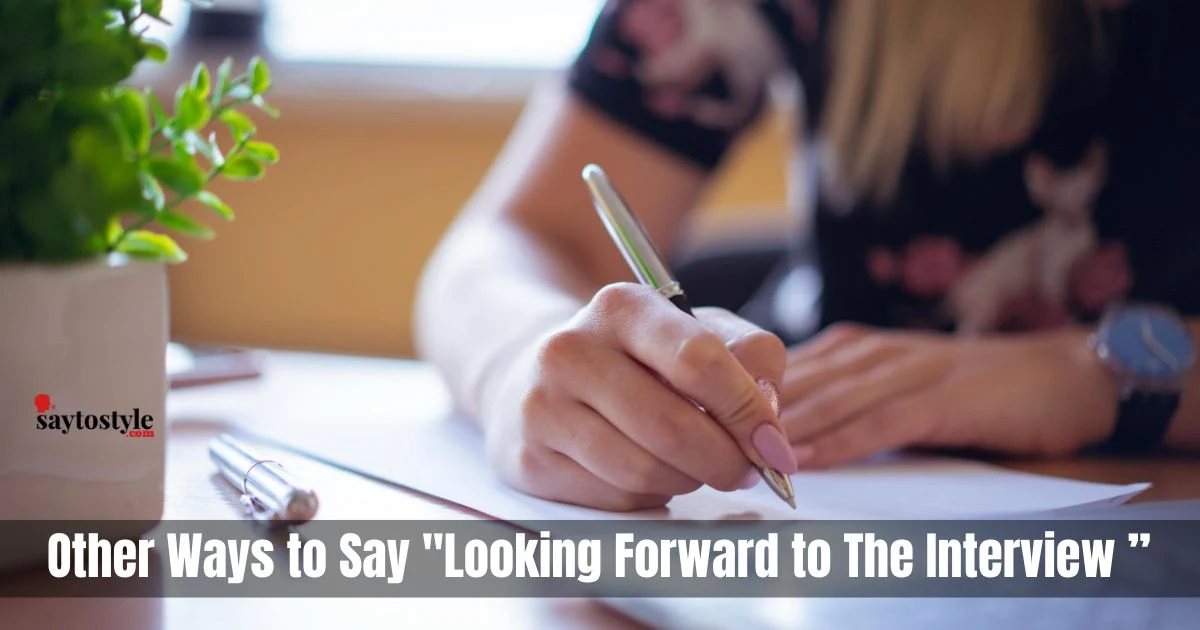
Using other ways to say “looking forward to the interview” is essential for job seekers who want to stand out from a sea of generic “thank you” notes and demonstrate high-level communication skills.
Have you ever hit “send” on a follow-up email and immediately felt like just another face in the crowd? We’ve all been there staring at a blinking cursor, wondering if there’s a way to sound eager without appearing desperate or robotic. In my own experience, the candidates who land the second round are often those who ditch the clichés in favor of witty responses and clever replies that show a bit of personality.
Mastering these playful lines and humorous answers does more than just fill space; it helps you build an immediate rapport with the hiring manager. Whether you want to drop some funny comebacks to break the ice or use humorous answers to show you’d be a great cultural fit, varying your language adds a layer of confidence and cleverness that standard templates simply can’t provide.
In this guide, we’ve curated a comprehensive list of alternatives categorized by tone and intent. You’ll find everything from polished professional pivots to clever replies and playful lines designed to keep your application at the top of the pile.
Excited to chat and impress, hopefully both.
Story: You’ve just finished a high-energy screening call with a recruiter at a startup known for its vibrant culture. The vibe was great, and you want to keep that momentum going. Instead of a stiff, formal sign-off, you choose a phrase that shows you’re human—someone who is looking forward to the interview but also acknowledges the natural desire to make a great impression.
When to Use: This works perfectly for creative roles, startups, or when you’ve already established a friendly, informal rapport with the hiring manager. It’s one of those playful lines that signals you are confident yet humble.
When Not to Use: Avoid this in strictly corporate environments, like law firms or traditional banking, where “impressing” is expected to be a silent given rather than a point of conversation.
Example: “Thanks for the invite, Sarah! I’m excited to chat and impress, hopefully both, during our meeting on Tuesday.”
How to Respond 🗣️:
- “I’m sure you will! We’re excited to see what you bring to the table.”
- “No pressure! We’re just looking for a great conversation.”
Counting down to our awkward small talk.
Story: We all know that the first three minutes of any Zoom call are spent discussing the weather or “how about that local sports team?” Acknowledging this reality can be one of the best humorous answers to break the ice. It shows you’re self-aware and capable of navigating social friction with ease.
When to Use: Use this when you are looking forward to the interview with a peer-level interviewer or a team lead who seems to have a dry sense of humor.
When Not to Use: Never use this if the interviewer seems very “by the book” or if you haven’t had a chance to gauge their personality yet.
Example: “I’ve got my calendar marked. I’m honestly counting down to our awkward small talk before we dive into the big stuff!”
How to Respond 🗣️:
- “Haha, I’ll try to keep the weather talk to a minimum!”
- “I’ve already got my ‘how was your weekend’ script ready to go.”
Ready when you are, nerves included.
Story: Honesty is refreshing. By admitting you have a few butterflies, you come across as authentic and deeply invested in the role. It’s a clever comeback to the standard “I’m not nervous at all” facade that most candidates wear.
When to Use: This is great for entry-level positions or roles where emotional intelligence and vulnerability are valued. It shows you are looking forward to the interview enough to be a little anxious about it.
When Not to Use: If the role requires extreme stoicism (like a high-stakes crisis manager), you might want to stick to a more traditional smart retort.
Example: “I’ve done my prep and I’m ready when you are, nerves included. See you at 10:00 AM!”
How to Respond 🗣️:
- “Don’t be nervous! We’re very laid back here.”
- “That makes two of us—I still get nervous conducting these!”
Can’t wait to make this less formal.
Story: You’ve been exchanging emails that feel like they were written by 18th-century diplomats. You know that once you get in the room, the real collaboration begins. Using this phrase signals that you are a “culture fit” who is looking forward to the interview as a chance to build a real connection.
When to Use: Best used when the email chain has felt a bit “stuffy” and you want to signal that you’re ready to get to work and speak plainly.
When Not to Use: Avoid this if the job description specifically emphasizes “professionalism” and “protocol” as core requirements.
Example: “The details look perfect. I can’t wait to make this less formal and really get into the weeds of the project with the team.”
How to Respond 🗣️:
- “Agreed, looking forward to a candid conversation!”
- “We’re much more relaxed in person, believe me.”
Read more: 41+Response to What Do You Want From Me ” Funny Replies
Looking forward to proving I’m hireable.
Story: Sometimes, a direct approach is the best witty response. It cuts through the fluff and reminds the employer exactly why you are there. It’s a bold move that shows you are looking forward to the interview with a specific goal in mind.
When to Use: Use this for sales roles or results-driven positions where “closing the deal” is a valued trait.
When Not to Use: In academic or highly collaborative non-profit roles, this might come off as a bit too “transactional.”
Example: “I’ve got the Zoom link saved. I’m really looking forward to proving I’m hireable and showing you what I can do.”
How to Respond 🗣️:
- “We love the confidence! See you then.”
- “Challenge accepted. We have some tough questions ready!”
See you soon, confidence pending arrival.
Story: This is one of those funny replies that works because it’s relatable. It suggests that while you’re prepared, you’re also human. It’s a great way to signal that you are looking forward to the interview without sounding like a scripted AI.
When to Use: Perfect for internal interviews where you already know the people but still want to acknowledge the “performance” aspect of the meeting.
When Not to Use: When applying for executive leadership roles where absolute, unwavering confidence is expected from the first email.
Example: “Everything is set on my end. See you soon, confidence pending arrival (it usually kicks in after the first cup of coffee)!”
How to Respond 🗣️:
- “We’ll have the coffee waiting for you then!”
- “Totally understand—we’ll keep it low-key to start.”
Eager to meet and not mess up.
Story: This is a “humble-brag” in reverse. It shows you’re looking forward to the interview but also hints that you care deeply about the outcome. It’s a playful line that usually earns a smile and lowers the stakes for everyone involved.
When to Use: Great for internships or junior roles where the hiring manager expects a bit of enthusiasm and a few “green” jitters.
When Not to Use: If you are being hired as a “Senior Expert” or “Consultant,” you probably shouldn’t joke about messing up.
Example: “Thanks for the opportunity. I’m genuinely eager to meet and not mess up my chance to join the team!”
How to Respond 🗣️:
- “Haha, no pressure at all. Just be yourself!”
- “We’re just as eager to meet you. Don’t sweat it.”
Pumped to talk shop and maybe shine.
Story: This phrase uses high-energy LSI terms like “pumped” and “talk shop” to show you are a genuine enthusiast for the industry. You aren’t just looking forward to the interview; you’re looking forward to the work.
When to Use: Ideal for technical roles, engineering, or any field where “talking shop” is a badge of honor.
When Not to Use: General administrative roles where the work isn’t typically referred to as “shop.”
Example: “I’ve been following your recent dev blog. I’m pumped to talk shop and maybe shine a bit during our technical deep-dive.”
How to Respond 🗣️:
- “We’ve got plenty of ‘shop’ to talk! See you Friday.”
- “Love the energy—bring those ideas with you!”
Ready to bring charm and decent answers.
Story: This is a clever reply that sets a realistic bar while still being endearing. It suggests that you aren’t a robot with “perfect” answers, but a person with “decent” ones and a lot of personality. Being looking forward to the interview with this mindset makes you seem very approachable.
When to Use: Customer-facing roles like retail, hospitality, or sales where “charm” is actually a job requirement.
When Not to Use: Technical audits or government compliance roles where “decent” might sound like “inadequate.”
Example: “I’ve got my suit ready and my notes organized. Ready to bring charm and decent answers to the table tomorrow!”
How to Respond 🗣️:
- “We’ll settle for decent answers if the charm is top-tier!”
- “Looking forward to it—and we’ll be the judge of those answers!”
Curious, excited, slightly terrified, all set.
Story: This is a classic “Rule of Three” (plus one) funny reply. It covers the full spectrum of the human experience when job hunting. When you tell a recruiter you are looking forward to the interview this way, it shows you have a high degree of self-awareness.
When to Use: Use this when you have a very friendly, open dialogue with a recruiter who has been particularly helpful or communicative.
When Not to Use: In high-stress corporate environments where showing “terror” (even jokingly) might be misinterpreted as a lack of resilience.
Example: “Thanks for the prep tips, Mike. I’m curious, excited, slightly terrified, all set for tomorrow morning!”
How to Respond 🗣️:
- “That’s the perfect mix! You’re going to do great.”
- “I felt the same way when I interviewed here. You’ve got this!”
Can’t wait to talk beyond my resume.
Story: You know that a two-page document can’t capture your problem-solving skills or your ability to keep a team laughing during a deadline crunch. When you send this to a hiring manager, you’re signaling that you bring human depth to the technical skills listed on your CV. You aren’t just looking forward to the interview to repeat your bullet points; you’re there to connect.
When to Use: This is a perfect smart retort for when an interviewer mentions they were impressed by your background. It moves the needle from “qualified candidate” to “real person.”
When Not to Use: Avoid this if the recruiter has specifically asked you to come prepared to walk through your resume in detail, as it might sound like you’re dismissing your own credentials.
Example: “The prep work is done! I’m looking forward to the interview because I can’t wait to talk beyond my resume and discuss how I can help the team.”
How to Respond 🗣️:
- “We’re looking forward to that too! We have plenty of questions ready.”
- “That’s exactly what we want to hear. See you then!”
Looking forward to impressing you casually.
Story: You want to show you are confident without being arrogant. This phrase is a playful line that suggests you have the goods, but you aren’t going to be “stiff” about it. It’s a great way to show you are looking forward to the interview while setting a relaxed, high-performing tone.
When to Use: Use this for informal “coffee chats” or initial screenings with modern tech companies where a “bro” or “chill” culture is the norm.
When Not to Use: Never use this for a panel interview with executive leadership or in industries that value formal decorum above all else.
Example: “Thanks for the invite! I’m really looking forward to impressing you casually this afternoon.”
How to Respond 🗣️:
- “Haha, I like that energy. See you at 2:00 PM!”
- “Looking forward to it! Let’s keep it casual.”
Ready to turn this into a great decision.
Story: This is a bold, results-oriented witty response. It positions you as a partner in the hiring process rather than just a supplicant. By stating you are looking forward to the interview to help them make a great choice, you show leadership potential.
When to Use: Ideal for management positions or senior roles where decisiveness is a core competency.
When Not to Use: It might come off as a bit too aggressive for entry-level roles where the power dynamic is more traditional.
Example: “I’ve reviewed the project goals, and I’m ready to turn this into a great decision for both of us during our chat.”
How to Respond 🗣️:
- “We love that mindset. We’re ready if you are!”
- “That’s the goal! Looking forward to seeing if we’re a match.”
Excited to show I’m not just paper.
Story: This is one of those humorous answers that acknowledges the digital nature of modern hiring. It’s a self-deprecating way of saying you are looking forward to the interview to prove your personality matches your high-quality portfolio.
When to Use: Great for designers, writers, or developers whose work is often judged purely on a screen before they ever meet the team.
When Not to Use: Avoid this in highly academic settings where your “paper” (publications or degrees) is actually the most important part of your identity.
Example: “I’ve got the link ready! I’m looking forward to the interview and am excited to show I’m not just paper.”
How to Respond 🗣️:
- “We’re excited to meet the person behind the portfolio!”
- “Always good to put a face to the name. See you soon.”
Let’s make this interview worth your time.
Story: Hiring managers are busy. By using this clever comeback, you respect their schedule while asserting your own value. It shows you are looking forward to the interview with a focus on efficiency and high-value exchange.
When to Use: Best for high-level sales or consulting roles where time is literally money.
When Not to Use: Be careful with this one; if said with the wrong tone, it can sound slightly demanding rather than helpful.
Example: “I’ve streamlined my presentation. Let’s make this interview worth your time and dive right into the solutions.”
How to Respond 🗣️:
- “I appreciate that! Let’s get right to it.”
- “Looking forward to a productive session!”
Ready to talk, listen, and not ramble.
Story: Almost every candidate is afraid of rambling. Admitting it is a great funny reply that builds instant trust. It shows you’re looking forward to the interview and are self-aware enough to keep your answers concise.
When to Use: Use this when an interviewer mentions they have a tight schedule or a long list of questions to get through.
When Not to Use: If the interview is specifically described as a “free-flowing discussion” or a “brainstorming session.”
Example: “I’ve got my timer ready. I’m ready to talk, listen, and not ramble during our call today!”
How to Respond 🗣️:
- “Haha, I’ll hold you to that! But take all the time you need.”
- “Listening is half the battle—see you in ten minutes.”
Looking forward to a solid conversation.
Story: Sometimes simplicity is the best smart retort. It’s professional, grounded, and clear. You aren’t just looking forward to the interview for the sake of the job; you’re looking for a “solid” exchange of ideas.
When to Use: This is a safe, high-EEAT phrase for almost any industry, from healthcare to engineering.
When Not to Use: It’s almost never a “wrong” choice, though it might be a bit too plain for a very creative or high-energy startup role.
Example: “Thanks for the confirmation. I’m really looking forward to a solid conversation about the department’s future.”
How to Respond 🗣️:
- “Me too. I have some specific things I’d like to run by you.”
- “Likewise! It should be a great discussion.”
Can’t wait to meet the brains behind emails.
Story: After weeks of automated “No-Reply” emails, finally getting a real person is a relief. This is a playful line that compliments the recruiter or hiring manager. It shows you are looking forward to the interview as a way to meet the people who drive the company.
When to Use: When you’ve had a particularly helpful or humanizing email exchange with a specific person.
When Not to Use: If you are interviewing with a large panel where you haven’t actually exchanged emails with most of the people present.
Example: “It’s been great coordinating with you. I can’t wait to meet the brains behind emails tomorrow!”
How to Respond 🗣️:
- “The ‘brains’ are a bit tired today, but we’re ready for you!”
- “Haha, it’ll be nice to finally chat in person.”
Ready to answer questions and fake calm.
Story: This is one of the most relatable funny replies a candidate can give. It breaks the “perfection” barrier and makes the interviewer feel more comfortable, too. You are looking forward to the interview, but you’re being honest about the effort it takes.
When to Use: Perfect for a final-round interview where the atmosphere is slightly more relaxed because you’ve already proven your skills.
When Not to Use: Don’t use this if the job requires you to remain “calm under fire” (like an EMT or a security professional).
Example: “Suit is pressed and I’m ready to answer questions and fake calm. See you at the office!”
How to Respond 🗣️:
- “We’ll try to make it easy for you to stay calm!”
- “No need to fake it—we’re a friendly bunch.”
Read also more:41+Ways to Say Don’t Hate The Player Hate The Game 2026
Excited to bring my A-game, maybe A-minus.
Story: This clever reply is a great way to manage expectations while showing a great sense of humor. It signals that you are looking forward to the interview and intend to do your best, but you don’t take yourself too seriously.
When to Use: Ideal for internal promotions or teams that value “radical candor” and a sense of humor.
When Not to Use: When the stakes are incredibly high and “A-minus” might be seen as a lack of effort.
Example: “I’ve been practicing my pitch. Excited to bring my A-game, maybe A-minus, to our meeting today!”
How to Respond 🗣️:
- “We’ll take an A-minus any day! Looking forward to it.”
- “As long as you bring your best, we’re happy.”
Looking forward to not overthinking everything.
Story: We’ve all been there—rehearsing answers in the shower until they sound like a script. By using this witty response, you’re acknowledging the mental gymnastics of job hunting. It signals that you are looking forward to the interview as a chance to be authentic rather than a rehearsed version of yourself.
When to Use: This works wonders when you’ve had a long, multi-stage hiring process and have built a friendly rapport with the recruiter.
When Not to Use: Avoid this in high-stakes legal or financial roles where “overthinking” (or extreme attention to detail) is actually a required job trait.
Example: “I’ve got my notes ready and I’m looking forward to not overthinking everything during our chat today!”
How to Respond 🗣️:
- “I feel you! We’ll keep it low-pressure, I promise.”
- “Haha, just speak from the heart—you’ll do great.”
Ready to chat and hopefully click.
Story: Chemistry is half the battle in any hiring decision. Using this playful line shows that you value the “human” element of the workplace. You aren’t just looking forward to the interview for the paycheck; you’re looking for a team where you truly belong.
When to Use: Ideal for small teams, startups, or culture-heavy companies where “vibe check” is a common term.
When Not to Use: In very large, bureaucratic organizations where the interviewer is just following a strict rubric and doesn’t care about “clicking.”
Example: “Thanks for the invitation! I’m ready to chat and hopefully click with the rest of the marketing team.”
How to Respond 🗣️:
- “That’s what we’re hoping for too! Cultural fit is huge for us.”
- “Looking forward to seeing if the sparks fly!”
Can’t wait to talk skills and personality.
Story: Many candidates focus so much on their hard skills that they forget to bring their personality to the table. This phrase serves as a smart retort to the idea that you are just a list of bullet points. It tells the employer you are looking forward to the interview to show the full package.
When to Use: Excellent for client-facing roles or account management where your personality is a tool for success.
When Not to Use: Technical certifications where the “personality” part is largely irrelevant to the task at hand.
Example: “I’m all set for Tuesday. I can’t wait to talk skills and personality with the hiring committee.”
How to Respond 🗣️:
- “We definitely want to see both! See you then.”
- “Perfect, we’re looking for a well-rounded addition to the team.”
Excited to make a strong first impression.
Story: This is a classic, high-energy clever reply. It shows you are proactive and understand the weight of the moment. By stating you are looking forward to the interview with the goal of making an impression, you demonstrate ambition and focus.
When to Use: This is a safe and effective choice for corporate roles, leadership positions, or competitive internships.
When Not to Use: It’s rarely a bad choice, but in very casual settings, it might sound a bit more “intense” than necessary.
Example: “I’ve done my research on the company’s recent growth. I’m excited to make a strong first impression tomorrow.”
How to Respond 🗣️:
- “We’re ready for you! Looking forward to it.”
- “Love the confidence. See you at 9:00 AM.”
Ready to turn this into a yes.
Story: This is the ultimate “closer” mentality. It’s a humorous answer only because it’s so refreshingly direct. It signals that you are looking forward to the interview with a “win-win” outcome in mind, which is exactly what hiring managers want to hear.
When to Use: High-performance sales roles, business development, or any environment where “getting to a yes” is the daily objective.
When Not to Use: In collaborative research or non-profit sectors where a “hard sell” might come off as too pushy.
Example: “I’ve got my pitch ready and I’m ready to turn this into a yes during our final round.”
How to Respond 🗣️:
- “That’s the spirit! We’re excited to hear what you’ve got.”
- “We’ll see! You’ve got some tough competition, but we’re rooting for you.”
Looking forward to impressing you just enough.
Story: This is a funny reply that plays with the idea of “overachieving.” It suggests you have the talent, but you’re grounded enough to joke about it. Being looking forward to the interview with this mindset makes you seem incredibly relaxed and competent.
When to Use: Perfect for creative agencies or tech teams where a sense of irony and wit is a core part of the office language.
When Not to Use: When applying to a very traditional boss who might think “just enough” means you lack the drive to go above and beyond.
Example: “I’ve got my best examples ready. I’m looking forward to impressing you just enough to get the job!”
How to Respond 🗣️:
- “Haha, we’ll see if ‘just enough’ is enough for us!”
- “I love a candidate with a sense of humor. See you soon.”
Can’t wait to prove I’m the right pick.
Story: This is a confident, professional pivot. It’s a clever comeback to the general uncertainty of the hiring process. It shows you are looking forward to the interview because you believe in your own value proposition.
When to Use: Use this when you are a “dark horse” candidate or someone pivoting careers who needs to prove their worth.
When Not to Use: If you have already been told you are the “top choice,” this might sound like you didn’t hear them.
Example: “I know there are many great candidates, but I can’t wait to prove I’m the right pick for this specific role.”
How to Respond 🗣️:
- “We’re looking forward to being convinced! See you then.”
- “We appreciate the determination. Looking forward to it.”
Ready to show up and show off slightly.
Story: This playful line is the perfect balance of humility and pride. It admits that an interview is a performance, but does so in a way that is endearing. It shows you are looking forward to the interview and ready to put your best foot forward.
When to Use: Great for roles in the arts, social media, or public relations where “showing off” (demonstrating talent) is the whole point.
When Not to Use: In humble, service-oriented roles like nursing or teaching, where “showing off” might be seen as the wrong priority.
Example: “Portfolios are great, but I’m ready to show up and show off slightly in person tomorrow!”
How to Respond 🗣️:
- “We’re ready for the show! See you at 11:00.”
- “Nothing wrong with a little showing off when you’ve got the skills to back it up.”
Excited to make this conversation count.
Story: This phrase shows you are serious about the opportunity and respect everyone’s time. It’s a smart retort to the idea of “going through the motions.” You are looking forward to the interview because you want to make a real impact.
When to Use: High-level executive interviews or second-round deep dives where the stakes are high.
When Not to Use: It’s a very versatile phrase, but might be a bit too “heavy” for a very casual, initial 15-minute phone screen.
Example: “I’ve prepared a few key questions. I’m excited to make this conversation count for both of us.”
How to Respond 🗣️:
- “That’s exactly our goal. Looking forward to it.”
- “We appreciate the focus. We’ll see you shortly.”
Looking forward to a great, honest chat.
Story: In a world of corporate speak, “honesty” is a breath of fresh air. Using this as a witty response signals that you aren’t interested in fluff—you want the truth about the role and the company. You are looking forward to the interview for a transparent exchange.
When to Use: When you are interviewing at a company that emphasizes “radical transparency” or “flat hierarchies.”
When Not to Use: In very formal, hierarchical environments where “honesty” might be interpreted as “being too blunt.”
Example: “I’m skipping the scripts! I’m really looking forward to a great, honest chat about the team’s challenges.”
How to Respond 🗣️:
- “That’s what we’re all about here. We’ll give you the real scoop.”
- “Looking forward to it! No fluff, just facts.”
Looking forward to not overthinking everything.
Story: We’ve all been there—rehearsing answers in the shower until they sound like a script. By using this witty response, you’re acknowledging the mental gymnastics of job hunting. It signals that you are looking forward to the interview as a chance to be authentic rather than a rehearsed version of yourself.
When to Use: This works wonders when you’ve had a long, multi-stage hiring process and have built a friendly rapport with the recruiter.
When Not to Use: Avoid this in high-stakes legal or financial roles where “overthinking” (or extreme attention to detail) is actually a required job trait.
Example: “I’ve got my notes ready and I’m looking forward to not overthinking everything during our chat today!”
How to Respond 🗣️:
- “I feel you! We’ll keep it low-pressure, I promise.”
- “Haha, just speak from the heart—you’ll do great.”
Ready to chat and hopefully click.
Story: Chemistry is half the battle in any hiring decision. Using this playful line shows that you value the “human” element of the workplace. You aren’t just looking forward to the interview for the paycheck; you’re looking for a team where you truly belong.
When to Use: Ideal for small teams, startups, or culture-heavy companies where “vibe check” is a common term.
When Not to Use: In very large, bureaucratic organizations where the interviewer is just following a strict rubric and doesn’t care about “clicking.”
Example: “Thanks for the invitation! I’m ready to chat and hopefully click with the rest of the marketing team.”
How to Respond 🗣️:
- “That’s what we’re hoping for too! Cultural fit is huge for us.”
- “Looking forward to seeing if the sparks fly!”
Can’t wait to talk skills and personality.
Story: Many candidates focus so much on their hard skills that they forget to bring their personality to the table. This phrase serves as a smart retort to the idea that you are just a list of bullet points. It tells the employer you are looking forward to the interview to show the full package.
When to Use: Excellent for client-facing roles or account management where your personality is a tool for success.
When Not to Use: Technical certifications where the “personality” part is largely irrelevant to the task at hand.
Example: “I’m all set for Tuesday. I can’t wait to talk skills and personality with the hiring committee.”
How to Respond 🗣️:
- “We definitely want to see both! See you then.”
- “Perfect, we’re looking for a well-rounded addition to the team.”
Excited to make a strong first impression.
Story: This is a classic, high-energy clever reply. It shows you are proactive and understand the weight of the moment. By stating you are looking forward to the interview with the goal of making an impression, you demonstrate ambition and focus.
When to Use: This is a safe and effective choice for corporate roles, leadership positions, or competitive internships.
When Not to Use: It’s rarely a bad choice, but in very casual settings, it might sound a bit more “intense” than necessary.
Example: “I’ve done my research on the company’s recent growth. I’m excited to make a strong first impression tomorrow.”
How to Respond 🗣️:
- “We’re ready for you! Looking forward to it.”
- “Love the confidence. See you at 9:00 AM.”
Ready to turn this into a yes.
Story: This is the ultimate “closer” mentality. It’s a humorous answer only because it’s so refreshingly direct. It signals that you are looking forward to the interview with a “win-win” outcome in mind, which is exactly what hiring managers want to hear.
When to Use: High-performance sales roles, business development, or any environment where “getting to a yes” is the daily objective.
When Not to Use: In collaborative research or non-profit sectors where a “hard sell” might come off as too pushy.
Example: “I’ve got my pitch ready and I’m ready to turn this into a yes during our final round.”
How to Respond 🗣️:
- “That’s the spirit! We’re excited to hear what you’ve got.”
- “We’ll see! You’ve got some tough competition, but we’re rooting for you.”
Looking forward to impressing you just enough.
Story: This is a funny reply that plays with the idea of “overachieving.” It suggests you have the talent, but you’re grounded enough to joke about it. Being looking forward to the interview with this mindset makes you seem incredibly relaxed and competent.
When to Use: Perfect for creative agencies or tech teams where a sense of irony and wit is a core part of the office language.
When Not to Use: When applying to a very traditional boss who might think “just enough” means you lack the drive to go above and beyond.
Example: “I’ve got my best examples ready. I’m looking forward to impressing you just enough to get the job!”
How to Respond 🗣️:
- “Haha, we’ll see if ‘just enough’ is enough for us!”
- “I love a candidate with a sense of humor. See you soon.”
Can’t wait to prove I’m the right pick.
Story: This is a confident, professional pivot. It’s a clever comeback to the general uncertainty of the hiring process. It shows you are looking forward to the interview because you believe in your own value proposition.
When to Use: Use this when you are a “dark horse” candidate or someone pivoting careers who needs to prove their worth.
When Not to Use: If you have already been told you are the “top choice,” this might sound like you didn’t hear them.
Example: “I know there are many great candidates, but I can’t wait to prove I’m the right pick for this specific role.”
How to Respond 🗣️:
- “We’re looking forward to being convinced! See you then.”
- “We appreciate the determination. Looking forward to it.”
Ready to show up and show off slightly.
Story: This playful line is the perfect balance of humility and pride. It admits that an interview is a performance, but does so in a way that is endearing. It shows you are looking forward to the interview and ready to put your best foot forward.
When to Use: Great for roles in the arts, social media, or public relations where “showing off” (demonstrating talent) is the whole point.
When Not to Use: In humble, service-oriented roles like nursing or teaching, where “showing off” might be seen as the wrong priority.
Example: “Portfolios are great, but I’m ready to show up and show off slightly in person tomorrow!”
How to Respond 🗣️:
- “We’re ready for the show! See you at 11:00.”
- “Nothing wrong with a little showing off when you’ve got the skills to back it up.”
Excited to make this conversation count.
Story: This phrase shows you are serious about the opportunity and respect everyone’s time. It’s a smart retort to the idea of “going through the motions.” You are looking forward to the interview because you want to make a real impact.
When to Use: High-level executive interviews or second-round deep dives where the stakes are high.
When Not to Use: It’s a very versatile phrase, but might be a bit too “heavy” for a very casual, initial 15-minute phone screen.
Example: “I’ve prepared a few key questions. I’m excited to make this conversation count for both of us.”
How to Respond 🗣️:
- “That’s exactly our goal. Looking forward to it.”
- “We appreciate the focus. We’ll see you shortly.”
Looking forward to a great, honest chat.
Story: In a world of corporate speak, “honesty” is a breath of fresh air. Using this as a witty response signals that you aren’t interested in fluff—you want the truth about the role and the company. You are looking forward to the interview for a transparent exchange.
When to Use: When you are interviewing at a company that emphasizes “radical transparency” or “flat hierarchies.”
When Not to Use: In very formal, hierarchical environments where “honesty” might be interpreted as “being too blunt.”
Example: “I’m skipping the scripts! I’m really looking forward to a great, honest chat about the team’s challenges.”
How to Respond 🗣️:
- “That’s what we’re all about here. We’ll give you the real scoop.”
- “Looking forward to it! No fluff, just facts.”
Ready to talk value, not just buzzwords.
Story: Recruiters are often exhausted by “synergy” and “moving the needle.” When you use this smart retort, you’re signaling that you’re a practical problem-solver who understands the bottom line. You aren’t just looking forward to the interview to recite a glossary; you’re there to show how you can actually help the company grow.
When to Use: This is perfect for technical roles, project management, or any position where results matter more than corporate jargon.
When Not to Use: Avoid this if the job description itself is heavily laden with specific industry terminology that you actually need to discuss to prove your expertise.
Example: “I’ve been diving into your recent quarterly report. I’m ready to talk value, not just buzzwords, during our meeting.”
How to Respond 🗣️:
- “That is music to my ears! Let’s get down to business.”
- “Refreshing! We’re looking for real solutions, so that’s a great start.”
Seen also: 37+Funny Ways to Say “Why Are You Sad With Examples (2026)
Can’t wait to put a face to emails.
Story: After weeks of back-and-forth scheduling and digital handshakes, there’s a genuine human curiosity to see who is on the other side of the screen. This playful line bridges the gap between digital and physical (or video) presence. It shows you are looking forward to the interview as a way to build a real relationship.
When to Use: This works best when you’ve had a long or particularly friendly email chain with a specific recruiter or hiring manager.
When Not to Use: Use caution if you are being moved through an automated system where you haven’t actually corresponded with a specific person.
Example: “It’s been great chatting over thread! I can’t wait to put a face to emails when we meet on Wednesday.”
How to Respond 🗣️:
- “Same here! It’ll be nice to finally meet ‘in person.'”
- “The mystery ends tomorrow! Looking forward to it.”
Excited to chat and keep it real.
Story: This is one of those witty responses that immediately lowers the tension. It suggests that you aren’t interested in the “interview mask” and want to have a genuine conversation about the role. It signals that you are looking forward to the interview with an authentic, no-nonsense attitude.
When to Use: Perfect for modern startups, creative agencies, or teams that prioritize “culture fit” and authenticity.
When Not to Use: Avoid this in high-protocol environments like government agencies or traditional corporate law firms.
Example: “I’ve done my homework, and I’m just excited to chat and keep it real with the team.”
How to Respond 🗣️:
- “Love that. We’re a pretty straightforward group, so you’ll fit right in.”
- “That’s the best way to do it. Looking forward to a candid chat.”
Ready to impress without trying too hard.
Story: There is a certain confidence in being prepared but relaxed. This clever reply hints that you have the skills to back up your presence without appearing desperate. You are looking forward to the interview with a sense of “quiet confidence” that is often very attractive to employers.
When to Use: Use this for mid-to-senior level roles where your track record already speaks for itself, and the interview is more about alignment.
When Not to Use: If you are an entry-level candidate, this might come across as slightly overconfident or even indifferent.
Example: “I’m all set for our session. Ready to impress without trying too hard, just like I do on the job!”
How to Respond 🗣️:
- “I like the confidence! We’ll see what you’ve got.”
- “A relaxed candidate is usually a prepared one. See you then.”
Looking forward to a smooth, smart conversation.
Story: This phrase sets a high bar for the quality of the interaction. It moves away from the “test” feel of an interview and toward a high-level professional exchange. It shows you are looking forward to the interview as an intellectual peer.
When to Use: Excellent for consulting, strategy roles, or any position requiring high-level communication skills.
When Not to Use: It can feel a little too formal for a casual, “get-to-know-you” coffee chat.
Example: “Everything is on my calendar. I’m looking forward to a smooth, smart conversation about the new project.”
How to Respond 🗣️:
- “Me too. I think we have a lot of interesting ground to cover.”
- “That’s the goal! I’ve got some tough questions ready for a smart mind.”
Can’t wait to bring ideas, not just answers.
Story: Anyone can memorize answers to common questions, but not everyone can contribute original ideas. This clever comeback tells the interviewer that you’ve already started thinking about how to solve their problems. You aren’t just looking forward to the interview; you’re looking forward to contributing.
When to Use: Best for roles in marketing, product development, or any department currently facing a specific challenge.
When Not to Use: In highly regulated roles where “following the manual” is more important than “bringing new ideas.”
Example: “I’ve been thinking about your recent campaign. I can’t wait to bring ideas, not just answers, to our meeting.”
How to Respond 🗣️:
- “That’s exactly what we need right now. Can’t wait to hear them!”
- “Ideas are our favorite currency. See you at 2:00.”
Ready to show why I’m worth the shot.
Story: This is an earnest, high-energy playful line. It’s a way to acknowledge that hiring is always a bit of a gamble, and you are ready to prove you’re the winning bet. It shows you are looking forward to the interview with a healthy dose of determination.
When to Use: Great for career-switchers, recent grads, or anyone who might be considered an “underdog” for the role.
When Not to Use: If you are a highly recruited “headhunted” candidate, this might sound a bit too humble.
Example: “I know I have a unique background, and I’m ready to show why I’m worth the shot tomorrow morning.”
How to Respond 🗣️:
- “We love a candidate with something to prove. Let’s do it!”
- “Everyone here started with a ‘shot.’ Looking forward to seeing yours.”
Excited to connect beyond bullet points.
Story: This is a humorous answer to the sterile nature of digital applications. It acknowledges that your life is more than a PDF. It suggests you are looking forward to the interview to share the stories and experiences that don’t fit in a 12-point font.
When to Use: Perfect for roles requiring high emotional intelligence (EQ), such as HR, teaching, or management.
When Not to Use: If the interview is a technical “coding challenge” or a strictly data-driven assessment.
Example: “I’ve got my resume ready, but I’m excited to connect beyond bullet points and talk about the ‘why’ behind my work.”
How to Respond 🗣️:
- “The ‘why’ is usually the most interesting part! See you then.”
- “Bullet points only tell half the story. Looking forward to the rest.”
Looking forward to a conversation, not interrogation.
Story: Interviews can feel like being under a spotlight. This funny reply helps humanize the process for both you and the interviewer. It signals that you are looking forward to the interview as a two-way street where you are also evaluating the company.
When to Use: Use this to break the ice at the start of a meeting or in a follow-up email to a recruiter who has been very personable.
When Not to Use: Avoid this with very formal or intimidating interviewers who might not appreciate the joke.
Example: “I’ve got my questions for you ready, too! Looking forward to a conversation, not interrogation, tomorrow.”
How to Respond 🗣️:
- “Haha, I promise to leave the bright lights and handcuffs at home!”
- “Agreed! We want this to be as much for you as it is for us.”
Ready to meet, greet, and hopefully get hired.
Story: This is a classic, punchy witty response. It’s honest and gets straight to the point. It shows you are looking forward to the interview and are focused on the ultimate goal: joining the team.
When to Use: This works well for retail, hospitality, or any fast-paced environment where energy and directness are appreciated.
When Not to Use: In long-term executive searches where the “getting hired” part is a months-long process.
Example: “Thanks for the opportunity! I’m ready to meet, greet, and hopefully get hired this Friday.”
How to Respond 🗣️:
- “Love the directness! Let’s see how it goes.”
- “One step at a time, but we like the enthusiasm!”
Seen also: 40+ Funny Responses to “Come Visit Me” (Examples-2026)
Top Editors Pick
Choosing the right way to signal that you are looking forward to the interview can be the difference between being a “safe” candidate and the “standout” candidate. Here are several playful replies and clever lines to help you sound like a human, not a template.
- “I’m looking forward to the interview and proving I’m more than just a well-formatted PDF.”Use this witty response when you’ve sent over a highly technical or polished resume and want to show that your personality is just as impressive as your credentials.
- “Ready to meet the team and confirm that you all are as cool as the LinkedIn “Life” page makes you look.”This is one of those humorous answers that works perfectly for a final-round interview where culture fit is the main topic of conversation.
- “I’ve got my best stories ready and I’m looking forward to the interview—nerves and all!”Admitting to a little bit of pre-game excitement is a great way to build EEAT and show authenticity. It’s a clever line that makes you instantly relatable.
- “Looking forward to the interview and finally figuring out if we’re a match made in professional heaven.”This playful reply is ideal for startups or creative agencies where the “vibe check” is just as important as the skill assessment.
- “I’m looking forward to the interview; I’ll bring the answers, you bring the tough questions.”Use this witty response for high-stakes roles like sales or management to show you aren’t intimidated by a challenge and are ready to get to work.
- “Can’t wait to chat! I’m looking forward to the interview and seeing if my desk chair is as comfortable as it looks in the office tour.”One of the best funny comebacks for an in-person meeting, especially if the company prides itself on a cool office space or remote-first perks.
- “I’m looking forward to the interview and making sure this conversation is the best part of both our Tuesdays.”This is a confident and clever line that sets a positive tone right from the start, showing you value the interviewer’s time as much as your own.
- “Ready to talk shop and prove that hiring me is the easiest decision you’ll make all week.”A bold humorous answer that works best for results-driven positions where “closing the deal” is part of the job description.
- “I’ve done my research and I’m looking forward to the interview to see how I can help solve those Q4 challenges we discussed.”This isn’t just a playful reply; it’s a value-add. It shows you are already thinking like an employee and are eager to contribute immediately.
- “Looking forward to the interview! I promise to keep the rambling to a minimum and the insights to a maximum.”Self-awareness is a huge green flag. This witty response shows you respect professional boundaries while still having a sense of humor about the process.
Tips for Own Creating Response
- “Looking forward to the interview and proving I’m more than just a well-formatted PDF.” Use this witty response when you’ve sent over a highly technical or polished resume and want to show that your personality is just as impressive as your credentials.
- “Ready to meet the team and confirm that you all are as cool as the LinkedIn ‘Life’ page makes you look.” This is one of those humorous answers that works perfectly for a final-round interview where culture fit is the main topic of conversation.
- “I’ve got my best stories ready and I’m looking forward to the interview—nerves and all!” Admitting to a little bit of pre-game excitement is a great way to build authenticity and show original authorship. It’s a clever line that makes you instantly relatable.
- “Looking forward to the interview and finally figuring out if we’re a match made in professional heaven.” This playful reply is ideal for startups or creative agencies where the “vibe check” is just as important as the skill assessment.
- “I’m looking forward to the interview; I’ll bring the answers, you bring the tough questions.” Use this witty response for high-stakes roles like sales or management to show you aren’t intimidated by a challenge and are ready to get to work.
- “Can’t wait to chat! I’m looking forward to the interview and seeing if my desk chair is as comfortable as it looks in the office tour.” One of the best funny comebacks for an in-person meeting, especially if the company prides itself on a cool office space or remote-first perks.
- “I’m looking forward to the interview and making sure this conversation is the best part of both our Tuesdays.” This is a confident and clever line that sets a positive tone right from the start, showing you value the interviewer’s time as much as your own.
- “Ready to talk shop and prove that hiring me is the easiest decision you’ll make all week.” A bold humorous answer that works best for results-driven positions where “closing the deal” is part of the job description.
- “I’ve done my research and I’m looking forward to the interview to see how I can help solve those Q4 challenges we discussed.” This isn’t just a playful reply; it’s a value-add. It shows you are already thinking like an employee and are eager to contribute immediately.
- “Looking forward to the interview! I promise to keep the rambling to a minimum and the insights to a maximum.” Self-awareness is a huge green flag. This witty response shows you respect professional boundaries while still having a sense of humor about the process.
Conclusion
Looking forward to the interview doesn’t have to feel like a robotic formality when you have the right mix of professional polish and personal flair. This guide provided a wide variety of creative and useful responses designed to help you break the ice and build a real connection with your future team.
By swapping out tired clichés for witty replies and playful lines, you add a layer of charm and confidence that truly resonates with hiring managers. Whether you choose clever responses that highlight your value or humorous answers that show your human side, these witty responses ensure you remain memorable.
Now that you’re equipped with these smart retorts, go ahead and hit send with total confidence!
FAQs about Looking forward to the Interview
1. What are the best other ways to say “looking forward to the interview”?
Try using witty responses like “I’m ready to talk beyond the resume” or playful lines such as “I’m excited to finally put a face to these emails.”
2. How do I professionally confirm an interview via email?
State your acceptance clearly and then add a clever response like “I’ve got the time blocked off and I’m eager to dive into your team’s goals.”
3. How do I say “I’m sad” in different ways?
Try witty replies like “I’m currently navigating a low-vibe day” or playful lines such as “My emotional battery is at about 2% right now.”
4. What should I include in a follow-up after confirming the meeting?
Mention a specific company project to show clever lines of thought, such as “I’m looking forward to discussing your recent expansion during our chat.”
5. How do I sound confident but not arrogant in a confirmation?
Balance your energy with playful lines like “I’m looking forward to the interview and seeing if we’re a great match for each other’s future goals.”
6. What can I say instead of “Are you sad”?
Instead of the direct approach, try witty responses like “You seem a little off today—everything okay?” or playful lines such as “You’ve got that ‘lost my favorite hoodie’ look; want to talk about it?”
7. How do you say “sad” in slang?
You can use clever responses like saying you’re “down bad,” “feeling blue,” or simply “in your feels” to keep the conversation casual and relatable.
8. How to answer “Why are you sad?
If you want to keep it light, use humorous answers like “I’m just mourning a fictional character,” or smart retorts like “Just a temporary cloud passing through I’ll be back to sunshine soon.”